Forester Report

Updated: 7 days ago
Report on Examination of Disturbed Areas
Lake Murray, SC
Proposed by James D. Walters, Jr.
SC Registered Forester No. 601
ISA Certified Arborist No. SO-1281A
Prepared for Lake Murray Watch
October, 2025
The original management plan (1984) for FERC Project No. 516, developed by SCE&G for the Lake Murray shoreline and adjacent areas was revised a number of times in consultation with various agencies and authorities. The latest update was approved by the FERC in 2007. This plan involves establishing a 75’ buffer zone to be maintained undisturbed for the first 25 feet above the 360 foot contour. The remaining 50 feet above the 25’ area allows limited brushing, such as removal of noxious weeds and vines such as poison-ivy and invasive species. Mowing and landscaping are not allowed within this area. A 10 foot wide natural path is allowed for access to docks.
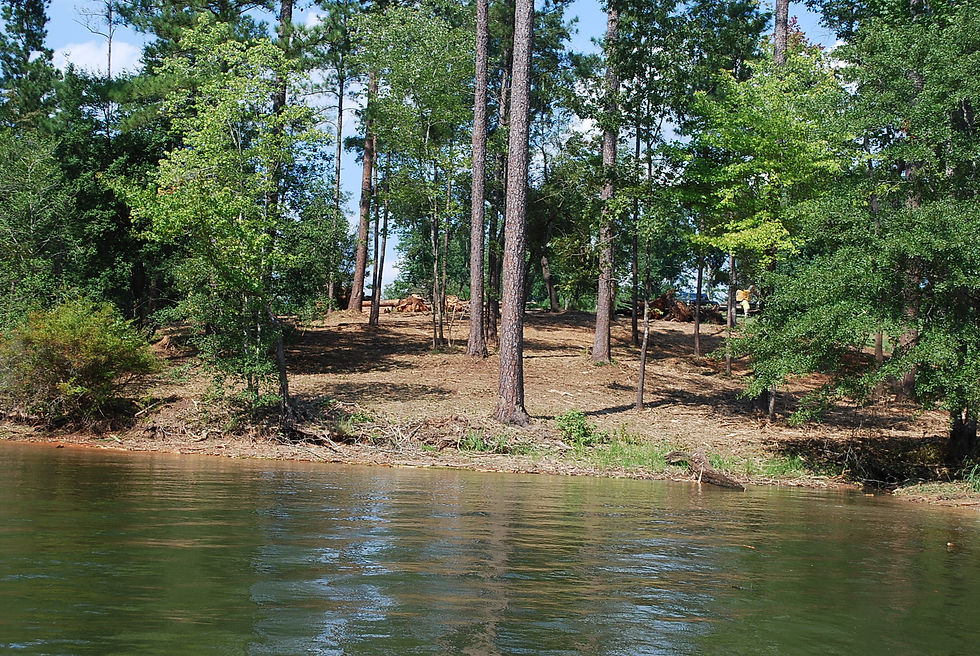
On October 6, 2025, shoreline properties in the Key Island Cove development were examined for compliance with the most recent plan. These buffers were established several years ago. It was found, that for the most part, the 25’ buffer and land below the 360 contour was being preserved (as required by the 2007 Plan), except for the pathway to the dock. Most of the vegetation in the 50’ zone, was cleared of natural vegetation except for scattered trees. A number of properties were observed with turf installed all the way to the water line on paths considerably wider than the allowed 10 feet.
As stated, most of these properties are mowed regularly, which prevents any succession of natural vegetation. An overstory of mature trees occurs on most properties, mostly mature loblolly pines. The pines are mature and are gradually dying out from lightning strikes or infestation by bark beetles (Ips species). A few wet areas and undeveloped areas support natural vegetation, including hardwood species.
The residential lawns, which provide benefits against soil erosion, provide little other environmental benefit. Runoff from lawns allows fertilizers, fungicides and insecticides to be washed into the lake. A natural tree canopy with a natural ground cover of accumulated leaves, etc. from the trees would more effectively prevent significant runoff into the lake and would intercept and filter any runoff from lawns. A forest floor permits infiltration of rainwater into the soil rather than runoff
For recreational users of the lake, the view from the water in front of 25’ zone provides some good protection of the scenic values, except for areas where wide dock paths occur. The maintenance of landscaped yards also prevents the accumulation of woody debris in the edge of the lake which would enhance fishing. A natural forest cover would also encourage wildlife, especially songbirds, and provide the natural beauty of wild flowering plants and trees. Presently, there is little midstory vegetation in the 50’ zone..
Proposed Plan: Natural Succession with Enrichment Planting
Vegetative buffer areas provide essential habitat for many species of wildlife. Much of South Carolina’s native wildlife depends on aquatic and wetland habitats. Birds, mammals, fish, frogs, and turtles spend some or all of their life cycle in or around the water. Fallen tree branches and logs provide habitat for fish, turtles and other aquatic wildlife. Aquatic plants and fallen debris also provide a refuge and a food source for insects, snails and other small creatures critical in the aquatic food chain. Plants along the water’s edge help moderate water temperatures by shading shallow water. This provides relief for aquatic organisms during the hot summer months.
Buffer areas along the shoreline contain important nesting, hunting, feeding and perching areas for songbirds. Standing dead trees (or snags) provide nesting cavities for woodpeckers, Carolina chickadees, nuthatches, wood ducks and other wildlife. Trees, shrubs, vines, and other plants produce a variety of nuts, berries and seed buds for birds and mammals. Plants along the shoreline attract insects that serve as food for many other species.
Vegetative buffers add aesthetic value. Branches of trees and shrubs can be used to frame a view. Selective removal of a few low branches can provide openings for views to the water from houses without significantly decreasing privacy. Vegetative buffers can help protect water quality, protect and provide habitat for wildlife, reduce noise, help stabilize the shoreline. Stop all mowing, blowing, raking and removal of live plants in the buffer. This reduces flood waters, moderate water temperatures and filter pollutants, nutrients and sediment. Buffers can do some or all of these things while maintaining aesthetic and recreational values. Implementing the 2007 plan will preclude the need to remove turf lawns.
The first step in restoring a natural shoreline is to stop all blowing, mowing and removal of live plants from the 75-foot buffer zone. This will allow succession of natural vegetation to begin. Removal of exotic invasive plant species should be allowed within the area, and allowance should be made for removal of pines for control of bark beetle outbreaks (Dendroctonus and Ips beetles).
Natural succession is a slow process, but it can be accelerated with the wise addition of vegetation that might otherwise take many years to appear. The 2007 Plan provides a replanting strategy that includes natural shrubs and bushes. Planting native trees and shrubs that occur in later successional stages can speed the process significantly.
This plan will greatly speed up the shoreline restoration through succession of a hardwood canopy. As the hardwoods and shrubs get established, the area will be much more pleasing aesthetically for recreational boaters and anglers than the landscaped lawns. Stop all mowing, blowing, raking and removal of live plants (other than poison oak/ivy and invasive exotics) within 75 feet of the 360 contour. This will allow natural mulch to accumulate. Plant desirable native trees and shrubs in the zone above the 360 contour and extending inland for 75 feet, using 4 to 6 foot tall nursery stock for trees, and shrubs no larger than “2 gallon” containers, on a 20-foot spacing between trees. Plant shrubs, grasses and forbs from the recommended list between the trees where no natural vegetation exists to achieve the desired density in the 2007 plan.
Supervision and Monitoring of Project
An independent third-party Certified Arborist should be engaged to monitor and approve tree species and any substitutions to specified plants, quality of plant materials, and proper planting procedures before payment is made to contractors. Specifications for plant quality and planting procedures should be based on industry standards (ANSI Z60.1 for plant quality and container size, and ANSI A300 Part 6 for planting).

This article provides excellent ideas for improving outdoor spaces with natural materials. Investing in professional custom stone work is a great way to create timeless features that enhance both the beauty and durability of any residential landscape